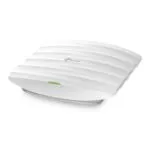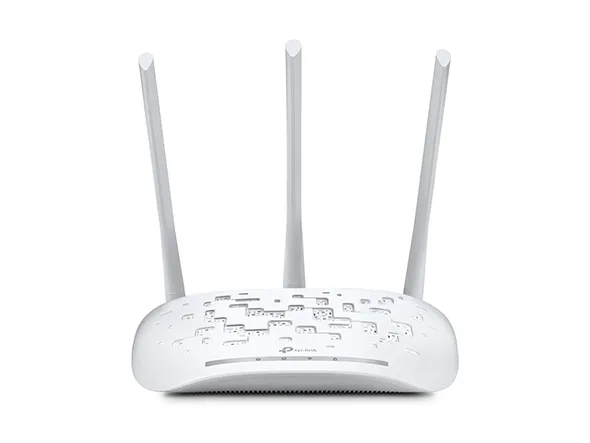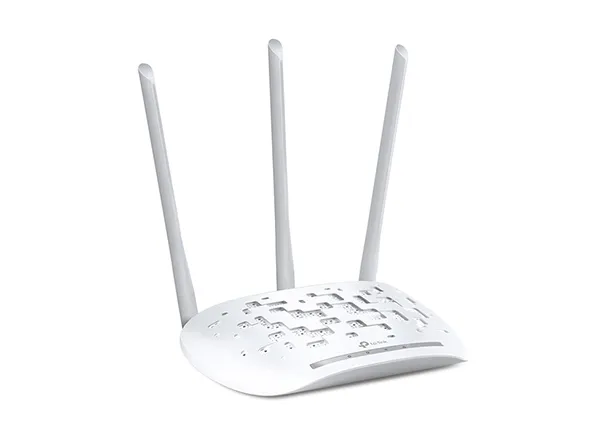
TP-Link 300Mbps Wireless N Ceiling Mount Access Point – TL-EAP110

Brand:
  • Cloud centralized management and Omada app for ultra convenience and easy management
  • Supports passive PoE for convenient installation up to 100meters2
  • Ceiling mounting design with chassis makes it easy to deploy on a wall or ceiling
  • The captive portal provides modern and professional user sign-in experience
  • Facebook check-in and SMS authentication expands your social exposure with secured technology
  • Multi-SSID divides multiple wireless networks for different user groups
  • Enterprise class Wi-Fi security help to decrease network security threats
  • Supports management VLAN for an enhanced network management

KSh 5,199.00 Exclusive of 16% VAT

Description

TP-Link 300Mbps Wireless N Ceiling Mount Access Point – TL-EAP110

The TP-Link EAP110 300Mbps Wireless N Ceiling Mount Access Point is a dedicated and professional-grade networking solution uniquely designed to provide stable, centralized Wi-Fi coverage in commercial settings like offices, cafes, and hotels. Its most distinctive feature is its ceiling-mount design with an inconspicuous, smoke detector-like appearance. This allows the device to blend seamlessly into any ceiling or wall, making it far less obtrusive and more aesthetically pleasing than traditional routers. Placing the access point on the ceiling also leverages the natural wireless propagation patterns, ensuring Wi-Fi signals radiate outwards and downwards to cover a wider, more uniform area without a “dead zone” directly beneath the device, which is a common issue with traditional desktop routers.

Adding to its professional-grade utility, the EAP110 is part of TP-Link’s Omada platform, which allows for centralized management via a dedicated Omada Controller software or cloud-based Omada SDN. This single-point management system is a game-changer for administrators, enabling them to configure, monitor, and manage hundreds of access points from a single dashboard. Features like firmware updates, load balancing, and network security policies can be deployed and controlled across the entire network with ease, drastically simplifying the management of a large-scale Wi-Fi infrastructure. This is a significant advantage over managing multiple standalone routers individually.